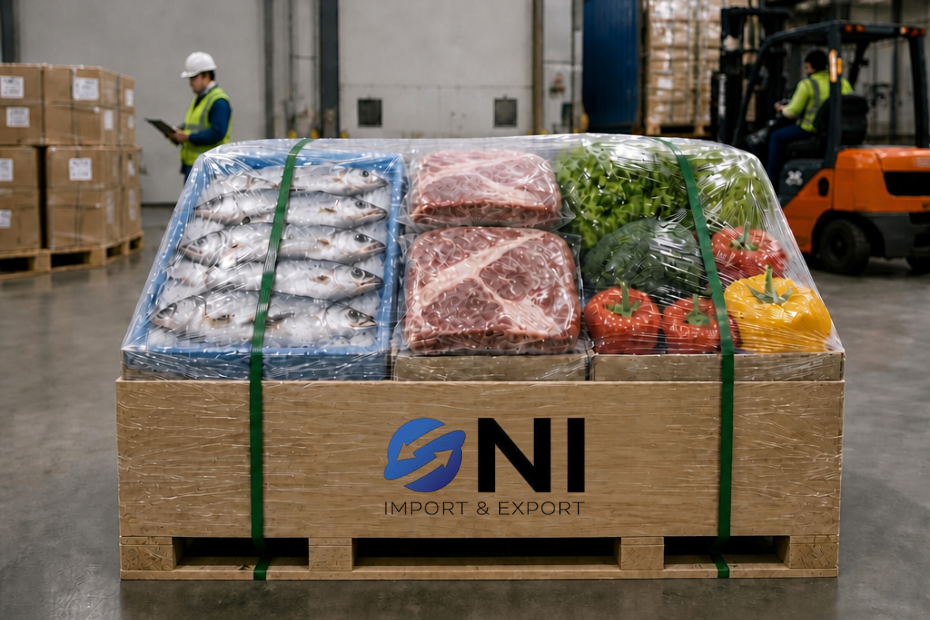
Behind every food product that reaches a distant market lies a network of suppliers, carriers, importers and distributors. It is not always visible, but it is what ensures that fish, meat, fruit or wine from one region reach those who need them, at the right time and in the right condition.
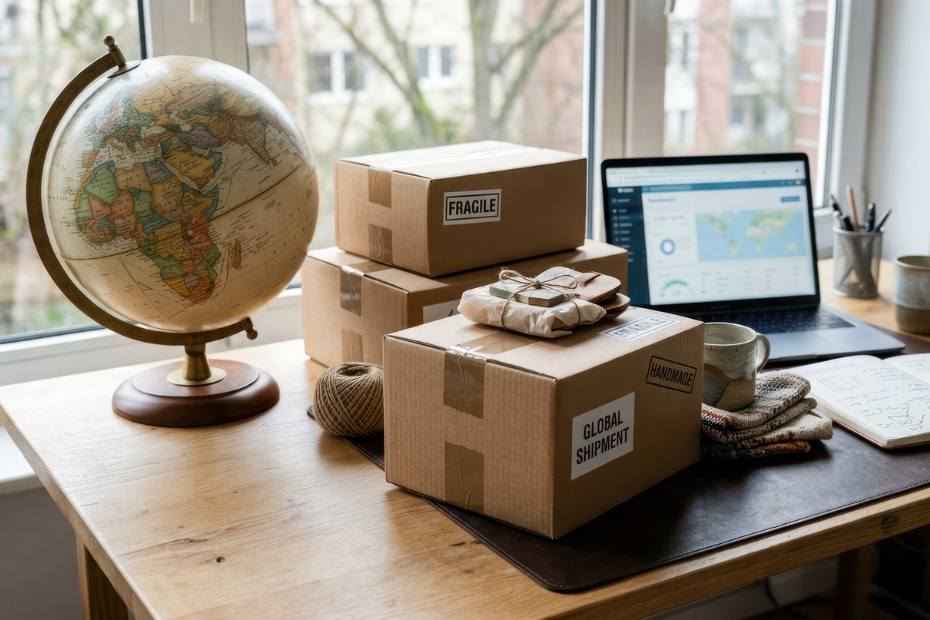
In this context, international food trading plays a central role. Companies operating under this model, such as ONI, act as a bridge between origin and destination, connecting those who produce with those who buy and taking charge of coordinating the whole process.
What international food trading is
Food trading involves buying products from suppliers in one country and selling them to buyers in another. A trading company is not, as a rule, either a producer or an end consumer. Its value lies in knowing the markets, selecting the best sources and organising the entire operation so that the product reaches its destination.
For the producer, this model opens doors to markets that would be hard to reach alone. For the buyer, it provides access to a wider range of products and to suppliers that have already been vetted.
The intermediary’s role between origin and destination
The intermediary does more than connect the two parties. It is responsible for identifying reliable suppliers, negotiating terms, checking product quality and adapting the offer to the requirements of the destination market.
Each market has its own preferences, formats and requirements. Understanding these differences makes it possible to propose tailored solutions for each client and to avoid mistakes that, in an international operation, can prove costly.
How an operation works, from start to finish
Although every case has its own particularities, a trading operation generally follows a similar path. It begins with identifying the buyer’s needs and selecting the most suitable supplier. Next come negotiating the commercial terms and preparing the documentation required for both the product and the destination.
Then logistics take over: sea or air transport, monitoring of storage conditions, customs procedures and delivery. For sensitive products such as fish, meat, fruit and vegetables, managing lead times and temperature is decisive in preserving quality.
The value this model adds for clients
Working with a trading company allows clients to centralise in a single partner tasks that would otherwise require several contacts, skill sets and processes. For clients, this means greater predictability, fewer risks and more time to focus on their own business.
It also means greater flexibility. By working with different product categories and origins, the intermediary helps reduce dependence on a single supplier and respond better to changes in demand or logistics.
Trust and traceability as the foundation of the relationship
In a sector where food safety and traceability are increasingly valued, trust between the parties is essential. Carefully selected suppliers, documentation in order and close communication throughout the process are what sustain lasting commercial relationships.
At ONI, we carefully select our suppliers, negotiate high-quality products at competitive prices and coordinate the entire logistical and administrative process, from origin to destination. In this way, we simplify import and export operations and allow our clients to focus on growing their business, with the reassurance of working with an experienced and trustworthy partner.
Keep up to date with all our news via our blog, as well as our social networks: Facebook, Instagram and LinkedIn.